
Streaming platforms generally follow two popular models: subscription-based OTT and ad-supported OTT. Both give viewers access to movies, web series and other entertainment, but the viewing experience and cost can be quite different.
For someone choosing an OTT service, understanding the difference between subscription vs ad-supported OTT can help decide which option offers better value.
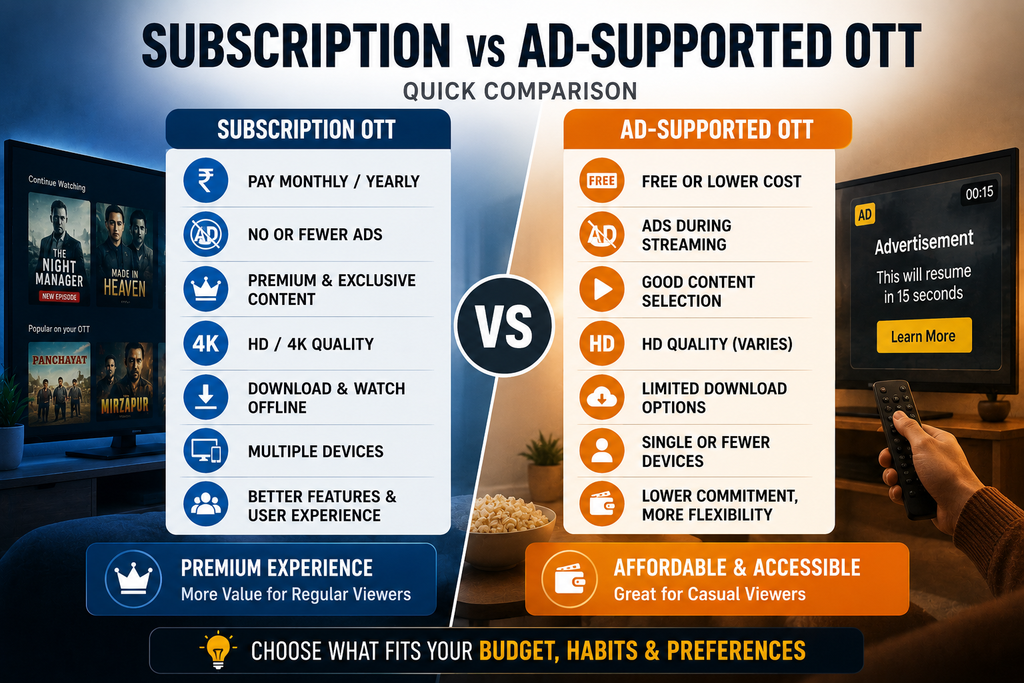
What Is Subscription-Based OTT?
A subscription-based OTT service requires viewers to pay a recurring fee to access its content.
Depending on the platform and plan, subscribers may get access to movies, web series, original shows, multiple devices and higher video quality.
Advantages
- Fewer or no advertisements, depending on the plan
- Large content libraries
- Premium and original content
- Better viewing experience
- Multiple subscription plans
- Often supports HD or 4K streaming on selected plans
Disadvantages
- Requires regular payment
- Having multiple subscriptions can become expensive
- Some content may still require an additional rental or purchase
- The available catalogue can change over time
What Is Ad-Supported OTT?
An ad-supported OTT service allows users to watch content for free or at a lower price, while the platform earns revenue by displaying advertisements.
Instead of paying the full cost through a subscription, viewers essentially exchange some of their viewing time for advertisements.
Advantages
- Free or cheaper access
- No long-term subscription commitment
- Useful for casual viewers
- Can provide access to movies and shows without paying for several services
- Good option for viewers who don’t mind advertisements
Disadvantages
- Advertisements interrupt viewing
- Some platforms may have fewer premium titles
- Video quality or features can depend on the service
- Advertisements may vary in frequency and duration
Subscription vs Ad-Supported OTT: Main Difference
The biggest difference is how the platform earns money from viewers.
With a subscription model, the viewer primarily pays through a monthly or yearly fee. With an ad-supported model, the platform can offer content at a lower price or for free and generate revenue through advertisements.
| Feature | Subscription OTT | Ad-Supported OTT |
|---|---|---|
| Cost | Paid | Free or lower-cost |
| Ads | Usually fewer or none | Regular advertisements |
| Content | Often premium | Depends on platform |
| Viewing Experience | More uninterrupted | Ads interrupt viewing |
| Best For | Regular viewers | Casual viewers |
| Commitment | Monthly/yearly payment | Little or no payment commitment |
| Value | More features for paying users | Lower cost |
Which Is Better for Regular Viewers?
If you watch movies and web series frequently, a subscription OTT plan can provide better convenience. You don’t have to wait through frequent advertisements, and premium plans may offer better video quality, downloads and device options.
However, paying for several platforms at the same time can quickly increase your monthly entertainment budget.
Which Is Better for Casual Viewers?
For people who watch OTT content only occasionally, ad-supported OTT can be a practical choice. You can watch available content without adding another monthly subscription. The trade-off is that you have to accept advertisements during playback.
What About Hybrid OTT Plans?
Many streaming services are moving toward a hybrid approach.
A platform may offer:
- A cheaper plan with advertisements
- A more expensive plan with fewer or no advertisements
- Premium plans with additional features
- Mobile-only or device-specific options
How to Choose the Right OTT Model
Before choosing between subscription vs ad-supported OTT, consider these questions:
How often do you watch OTT content?
Frequent viewers may get more value from a subscription.
Do advertisements bother you?
If you dislike interruptions, a premium subscription may be more suitable.
How much are you willing to spend?
If keeping entertainment costs low is your priority, ad-supported services can help.
Which shows and movies do you actually watch?
Don’t subscribe simply because a platform has a large catalogue. Check whether it has content you are genuinely interested in.
Do you need 4K, downloads or multiple screens?
If these features matter to you, compare the benefits included in each plan.
Subscription vs Ad-Supported OTT: Which One Should You Choose?
Choose subscription OTT if:
- You watch streaming services regularly
- You prefer fewer interruptions
- You want premium content
- You need features such as downloads or multiple screens
Choose ad-supported OTT if:
- You want to spend less
- You watch occasionally
- You don’t mind advertisements
- You want to try a service before paying
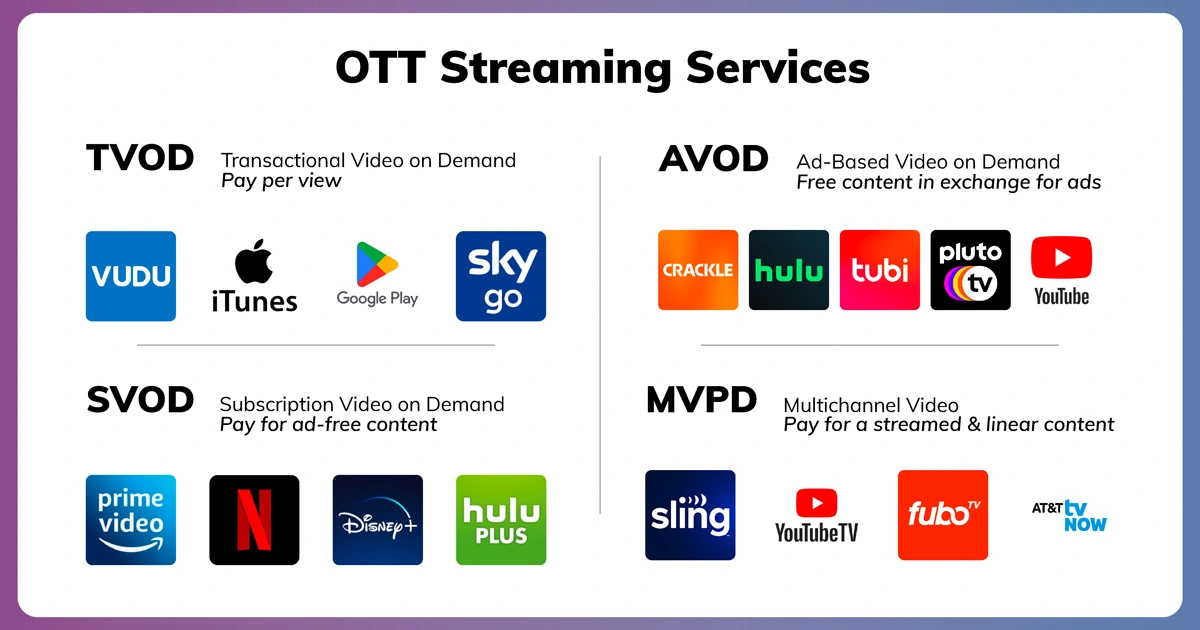
The subscription vs ad-supported OTT debate ultimately comes down to cost, viewing habits and convenience.
Subscription services can provide a smoother experience for regular viewers, while ad-supported platforms are attractive to people who want affordable or free entertainment. For many viewers, the best approach may actually be a combination: keep one or two subscriptions for the content you watch most and use free or ad-supported services for everything else.
There is no need to subscribe to every OTT platform. Choose the model that fits your viewing habits and budget.
Frequently Asked Questions
1. What is the difference between subscription and ad-supported OTT?
Subscription OTT requires viewers to pay a recurring fee, while ad-supported OTT provides free or cheaper access by showing advertisements during content.
2. Is ad-supported OTT better than subscription OTT?
It depends on your viewing habits. Ad-supported OTT is better for viewers who want to reduce costs, while subscription OTT is generally more convenient for frequent viewers who prefer fewer interruptions.
3. Is subscription OTT completely free of advertisements?
Not always. Some subscription services and plans may still include advertisements. Check the specific plan details before subscribing.
4. Why do OTT platforms show advertisements?
Advertisements provide an additional source of revenue for streaming platforms. This allows some services to offer content for free or provide cheaper subscription tiers.
Also read the Weekend Watch List: 10 Underrated OTT Movies & Series You Shouldn’t Miss
Also read the Top 10 Dark Mystery TV Shows You Must Watch (2026 Updated)
Also read the Which OTT Platform Is Best in India? Here’s How to Pick the Right One for You
Also read the New Ott Releases in India(August 3-8,2026)Netflix, Prime Video, Jio hotstar, Zee 5
For more Info, Please Visit the Netflix , Zee 5, Prime Video