
Have you ever wondered how a movie that was recently playing in theatres suddenly appears on an OTT platform? It may look like a simple streaming deal, but behind the scenes, filmmakers, producers, distributors and OTT platforms negotiate several things before a movie reaches your screen.
The OTT movie acquisition process can involve licensing rights, pricing, release windows, languages, territories and the expected audience for the film.
How Movies Get Sold to OTT Platforms
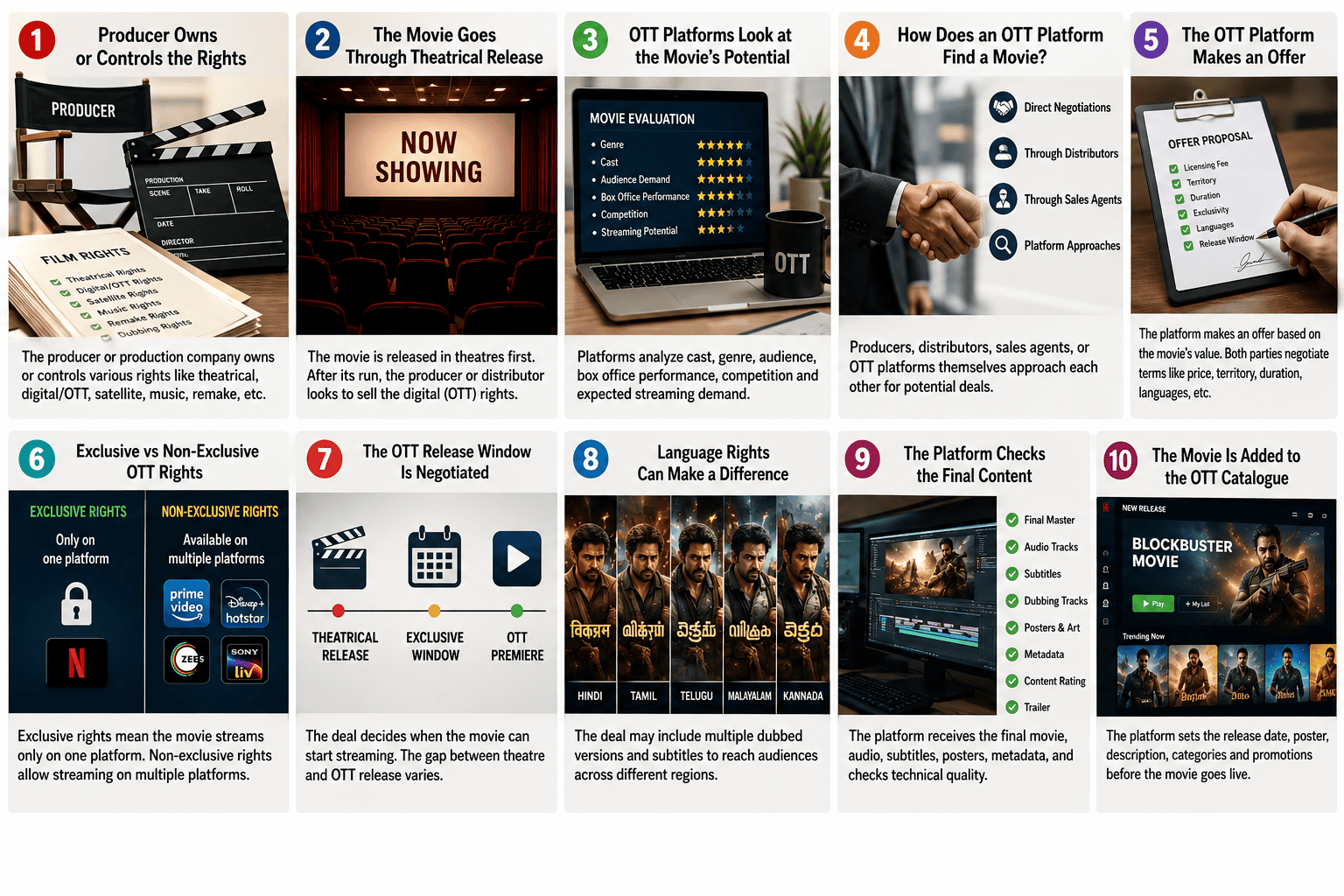
1. The Producer Owns or Controls the Rights
The process usually starts with the producer or production company that controls the movie’s distribution rights.
Before approaching an OTT platform, the producer needs to know which rights are available. A movie can have different rights for different uses, including:
- Theatrical rights
- Digital/OTT rights
- Satellite television rights
- Music rights
- Overseas rights
- Remake rights
- Dubbing rights
These rights can be sold separately or as part of a larger deal.
2. The Movie Goes Through Theatrical Release
For many Indian movies, the theatrical release comes before the OTT premiere.
After the cinema run, producers and distributors may approach streaming platforms with the movie’s performance data. Box-office results can become one of the factors considered during negotiations.
However, not every movie follows the same route. Some films are produced specifically for streaming, while others may have direct-to-OTT or limited theatrical releases.
3. OTT Platforms Look at the Movie’s Potential
An OTT platform doesn’t simply look at whether a movie was successful in theatres.
The platform may consider factors such as:
- Cast and director
- Genre
- Language
- Target audience
- Previous performance of similar titles
- Expected streaming demand
- Festival or seasonal relevance
- Existing content library
- Competition from other platforms
For example, a Telugu thriller may be particularly attractive to a platform trying to strengthen its Telugu-language catalogue.
4. How Does an OTT Platform Find a Movie?
There isn’t just one way for a movie to reach an OTT platform.
Direct Negotiations
A producer or studio may approach an OTT platform directly and discuss a potential deal.
Through Distributors
A distributor handling the movie may also be involved in negotiating digital rights.
Through Sales Agents
For some films, a rights or sales agency may represent the producer and approach multiple platforms.
OTT Platforms Approach Producers
Sometimes the platform itself may show interest in a movie because of its cast, genre, theatrical performance or potential audience.
5. The OTT Platform Makes an Offer
Once a platform is interested, negotiations begin.
The amount offered can depend on several factors rather than simply the movie’s production budget.
The parties may discuss:
- Licensing fee
- Duration of the agreement
- Geographic territory
- Languages
- Exclusive or non-exclusive rights
- Streaming start date
- Promotional commitments
- Whether the deal includes dubbed versions
This is where the OTT rights price can vary significantly from one movie to another.
6. Exclusive vs Non-Exclusive OTT Rights
One of the most important parts of the deal is whether the platform receives exclusive rights.
Exclusive Rights
If a platform receives exclusive digital streaming rights, the movie may be available only on that service during the agreed licensing period.
Non-Exclusive Rights
In some arrangements, the same movie can potentially be licensed to more than one platform or service, depending on the agreement.
The exact arrangement depends on the contract between the rights holder and the platforms.
7. The OTT Release Window Is Negotiated
Another major part of the deal is when the movie can start streaming.
Traditionally, movies often had a longer gap between theatrical release and OTT release. However, release windows can vary considerably today.
The agreement may specify a particular number of days after the theatrical release or a particular date.
For example:
Theatrical Release → Exclusive Window → OTT Premiere
The actual timeline depends on the movie and the rights agreement.
8. Language Rights Can Make a Difference
Indian cinema has a major advantage because movies can reach audiences across multiple language markets.
An OTT agreement may cover:
- Original language
- Hindi version
- Tamil version
- Telugu version
- Malayalam version
- Kannada version
- Other dubbed languages
Subtitles may also be included as part of the platform’s delivery requirements.

9. The Platform Checks the Final Content
Before a movie becomes available to subscribers, the OTT platform needs the required technical materials.
These can include:
- Final movie master
- Audio tracks
- Subtitles
- Dubbing tracks
- Posters and artwork
- Metadata
- Content rating information
- Trailer and promotional material
The platform may also have specific technical requirements for video and audio quality.
10. The Movie Is Added to the OTT Catalogue
Once the contract is completed and the required materials are delivered, the platform prepares the movie for release.
The platform’s team may decide:
- Release date
- Thumbnail
- Movie description
- Categories
- Search keywords
- Recommended placement
- Promotional banners
- Trailer placement
This is why two movies acquired around the same time can receive very different levels of visibility on an OTT service.
Does a Movie’s Box Office Decide Its OTT Price?
Not necessarily.
A movie that performs poorly in theatres can still attract an OTT platform if it has a strong cast, a particular genre, a loyal fan base or good streaming potential.
Likewise, a successful theatrical movie may command a high digital-rights value because the platform expects its existing popularity to translate into streaming views.
What Happens to Movies Made Directly for OTT?
Not every movie follows the theatrical route.
Some projects are commissioned or acquired specifically for streaming.
In such cases, the platform may become involved much earlier, sometimes before production begins.
The arrangement can therefore look more like:
Concept → Development → Production → OTT Premiere
rather than:
Production → Theatrical Release → OTT Deal → Streaming Premiere
Why OTT Platforms Buy Movies
For streaming services, acquiring movies is primarily about building a library that attracts and retains viewers.
A platform may want:
- Popular star-driven films
- Regional-language content
- New original movies
- Popular franchises
- Family entertainment
- Thriller and crime films
- Festival releases
- Films with strong audience demand
The right movie can help a platform attract new subscribers or keep existing users engaged.
What Happens When the OTT Deal Expires?
OTT rights are usually governed by a contract with a specific duration.
When that period ends, the rights holder may be able to:
- Renew the existing agreement
- Move the movie to another platform
- License it to another service
- Make it available through another distribution model
This is one reason why a movie can disappear from one streaming service and later appear somewhere else.
Final Thoughts
The process of how movies get sold to OTT platforms is much more complicated than simply uploading a film to a streaming service.
Producers and platforms negotiate everything from digital rights and licensing fees to territories, languages and release windows. The movie’s cast, genre, audience appeal, theatrical performance and streaming potential can all influence the deal.
For viewers, the final result is simple: they open an OTT app and press play. Behind that button, however, there can be a detailed business and rights agreement involving multiple companies and stakeholders.
Also read the Weekend Watch List: 10 Underrated OTT Movies & Series You Shouldn’t Miss
Also read the Top 10 Dark Mystery TV Shows You Must Watch (2026 Updated)
Also read the Which OTT Platform Is Best in India? Here’s How to Pick the Right One for You
Also read the New Ott Releases in India(August 3-8,2026)Netflix, Prime Video, Jio hotstar, Zee 5
For more Info, Please Visit the Netflix , Zee 5, Prime Video